
Visiting Arikok National Park: A First-Timer's Guide
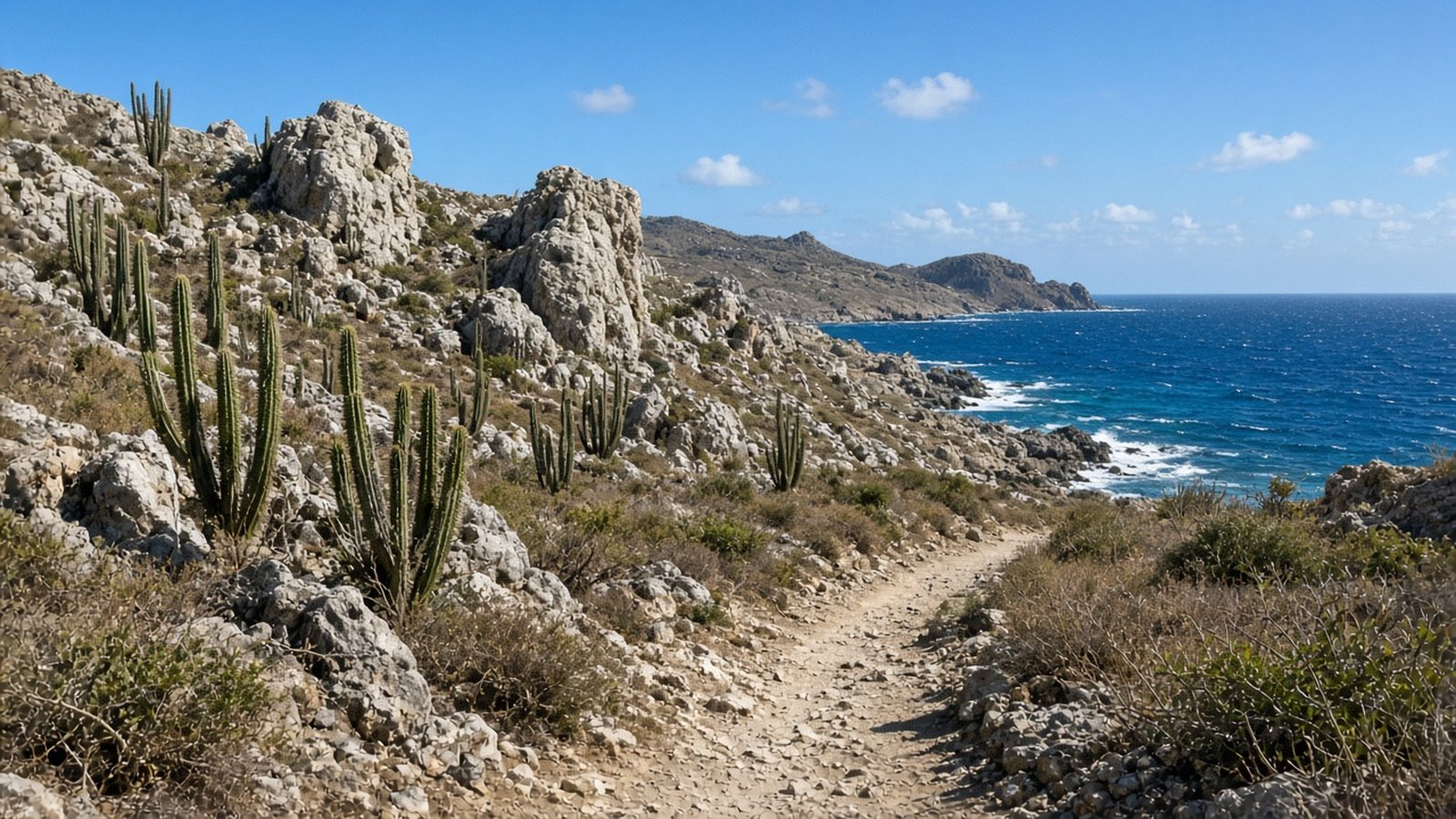
Most visitors know Aruba for its calm west-coast beaches, but the island has a completely different side. Arikok National Park covers a large part of Aruba's eastern interior and northeastern coast, and it is where you will find cactus-covered hills, limestone caves, rugged shoreline, and some of the island's most dramatic scenery.
A visit to Arikok is one of the best ways to understand Aruba beyond the resorts. This guide covers what to expect, how to plan your day, and how to stay safe in a landscape that is far wilder than the hotel strip.
What makes Arikok different
Aruba's interior is dry and arid. Instead of tropical rainforest, you will see cacti, hardy shrubs, divi-divi trees, and rock formations shaped by wind and sea. The park protects much of this landscape along with native wildlife such as lizards, birds, and the island's goats roaming the hills.
The windward north and east coasts face the open trade winds, so the water here is rough and the shoreline is rocky and wave-battered. It is spectacular to look at, but it is a very different environment from the gentle beaches you may be staying near.
Highlights to look for
Caves
The park includes several caves, some with ancient drawings attributed to the island's early Indigenous inhabitants. Exploring them is a highlight for many visitors, but bring a flashlight or use your phone's light, watch your footing, and respect any signs or barriers protecting fragile areas.
The Natural Pool
One of the park's best-known sights is a natural pool formed by volcanic rock on the coast, where waves crash over the rocks into a sheltered basin. Getting there involves a rough, unpaved route that is typically recommended only for four-wheel-drive vehicles, guided tours, or experienced hikers. Swimming conditions depend on the sea, so assess the waves carefully before getting in.
Windswept beaches and dunes
The park's coastline includes sandy coves and dunes that make for striking photos. These beaches are generally not safe for swimming because of strong currents and waves, so enjoy them from the shore.
Hills and viewpoints
Hiking trails lead up into the hills, where you can look out over the island and the sea. Even a short climb rewards you with wide views that are very different from the coastal resort areas.
How to visit
Self-drive
Many visitors explore by car. A standard car can handle paved roads and some areas, but the more remote parts of the park and the route to the Natural Pool require a sturdy four-wheel-drive vehicle and confidence on rough terrain. If you are unsure, stick to paved areas and leave the rougher tracks to a guide.
Guided tours
Jeep, UTV, and hiking tours are popular ways to see the park, especially if you do not want to drive challenging roads yourself. A guide also adds context about the history, geology, and wildlife you are seeing.
Hiking
For the active, hiking is the most immersive option. Trails vary in difficulty, and the heat and sun are serious factors. Start early, pick a route that fits your fitness, and let someone know your plans.
The park typically charges an entrance fee and has a visitor center where you can get current information on trails and conditions. Check the official park information before your visit for up-to-date fees and opening hours, as these can change.
What to bring
- Plenty of water: There is little shade and services are limited inside the park. Bring more than you think you will need.
- Sun protection: A hat, sunglasses, and reef-safe sunscreen are essential.
- Proper footwear: Closed shoes or sturdy sandals with grip for rocky trails and cave floors.
- Water shoes: Helpful if you plan to visit the Natural Pool, where the rocks can be sharp and slippery.
- Snacks: Especially if you plan to spend several hours exploring.
- A light: For exploring caves safely.
- A charged phone: Coverage can be patchy in places, but it is still useful for photos and emergencies.
Safety tips
- Respect the ocean. North-coast waters can be dangerous. Do not swim where it is rough, and never turn your back on the waves at the Natural Pool.
- Go early. Mornings are cooler and quieter. The midday sun in the interior can be intense.
- Stay on marked trails. This protects fragile plants and reduces your risk of getting lost or injured.
- Know your vehicle's limits. Rental agreements may restrict off-road driving, so check the terms before heading onto rough tracks.
- Leave no trace. Take all trash with you and do not disturb rock formations, cave drawings, or wildlife.
Planning your day
A half day is enough to see a cave or two, a viewpoint, and a stretch of coast, especially on a guided tour. A full day lets you combine hiking with a visit to the Natural Pool and the windward beaches. Many visitors pair the park with other stops on the north coast, such as the island's well-known lighthouse. Our guide to visiting Aruba's lighthouses can help you plan a route.
After a hot, dusty day in the park, you will appreciate returning to the calm beaches on the west coast. That contrast is part of what makes Aruba such a rewarding island to explore.
Frequently asked questions
Do I need a 4x4 to visit Arikok National Park?
Not for every part of the park, but you will need a capable four-wheel-drive vehicle, a tour, or a hike to reach the more remote areas such as the Natural Pool.
Can you swim at the beaches in Arikok?
Most of the park's beaches face rough open water with strong currents and are not considered safe for swimming. The Natural Pool can be swimmable when the sea is calm, but conditions vary.
How long should I spend in the park?
Plan at least a half day. A full day gives you time to hike, explore caves, and visit the coast without rushing.
Is Arikok good for families?
Yes, with planning. Choose shorter trails, bring plenty of water, and consider a guided tour for the rougher areas. Older children often love the caves.


